Archiving Life
Addressing the taboo topic of death with a service that combines digital and physical touchpoints to facilitate the process of death cleaning, the act of organising and decluttering belongings before death. Through a digital app and physical kit, users can document and preserve the stories behind their sentimental items, creating archives that ensure their belongings and memories are meaningfully preserved.
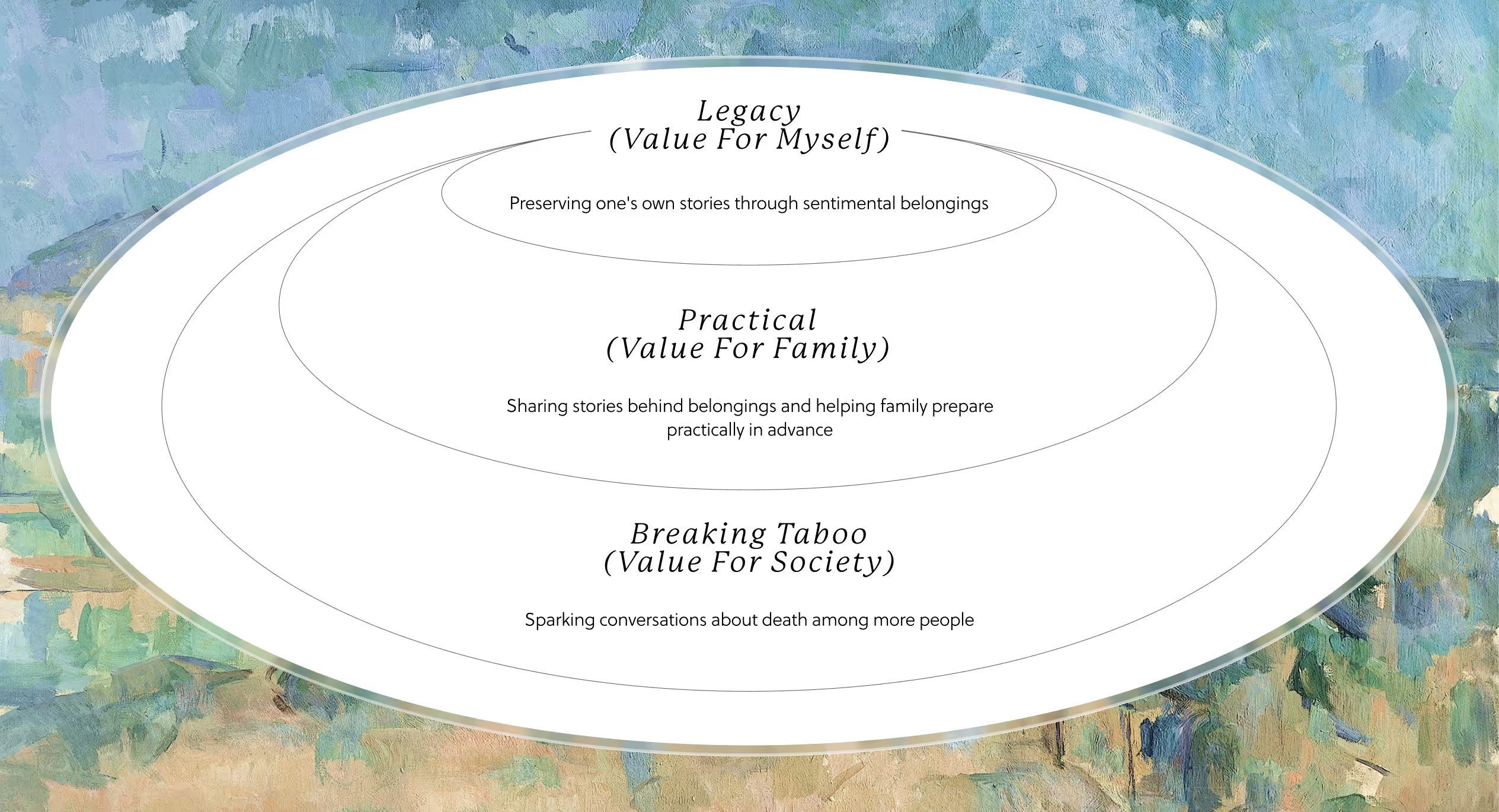
The service supports three core values: personal legacy preservation, practical assistance for families, and breaking societal taboos around death. The goal is to reduce the burden on families while creating opportunities for reflection and connection across generations.
- Project Type
- Service + Participatory Design Methodology
- Team
 Mai, Eonbi and me
- Timeline
- 6 weeks in 2025
- Keywords
- Service Design, Participatory Design, Co-Creation, Workshop Facilitating, Journey Mapping, Service Blueprint, Figma, UI
How do we prepare for death?
Talking or even thinking about your own death, or that of a loved one, is uncomfortable for most people. Yet it is something inevitable, and avoiding the conversation only creates more anxiety and practical issues down the line.
One practice that tries to change this is death cleaning. Known in Swedish as döstädning and popularised by Margareta Magnusson in her 2017 book, it refers to the process of decluttering and organising your belongings during the later stages of life, with the intention of sparing your loved ones the burden of sorting through everything after you are gone. And its value goes beyond the practical, opening up conversations about death before it happens, on your own terms.
Qualities of Death Cleaning
Death cleaning provides value on multiple levels. For yourself, it is a way to preserve your own stories and legacy through the belongings you choose to keep. For your family, it spares them the emotional and practical burden of sorting through everything alone. And for society, it is a small but meaningful act of normalising conversations about death.
Our Service
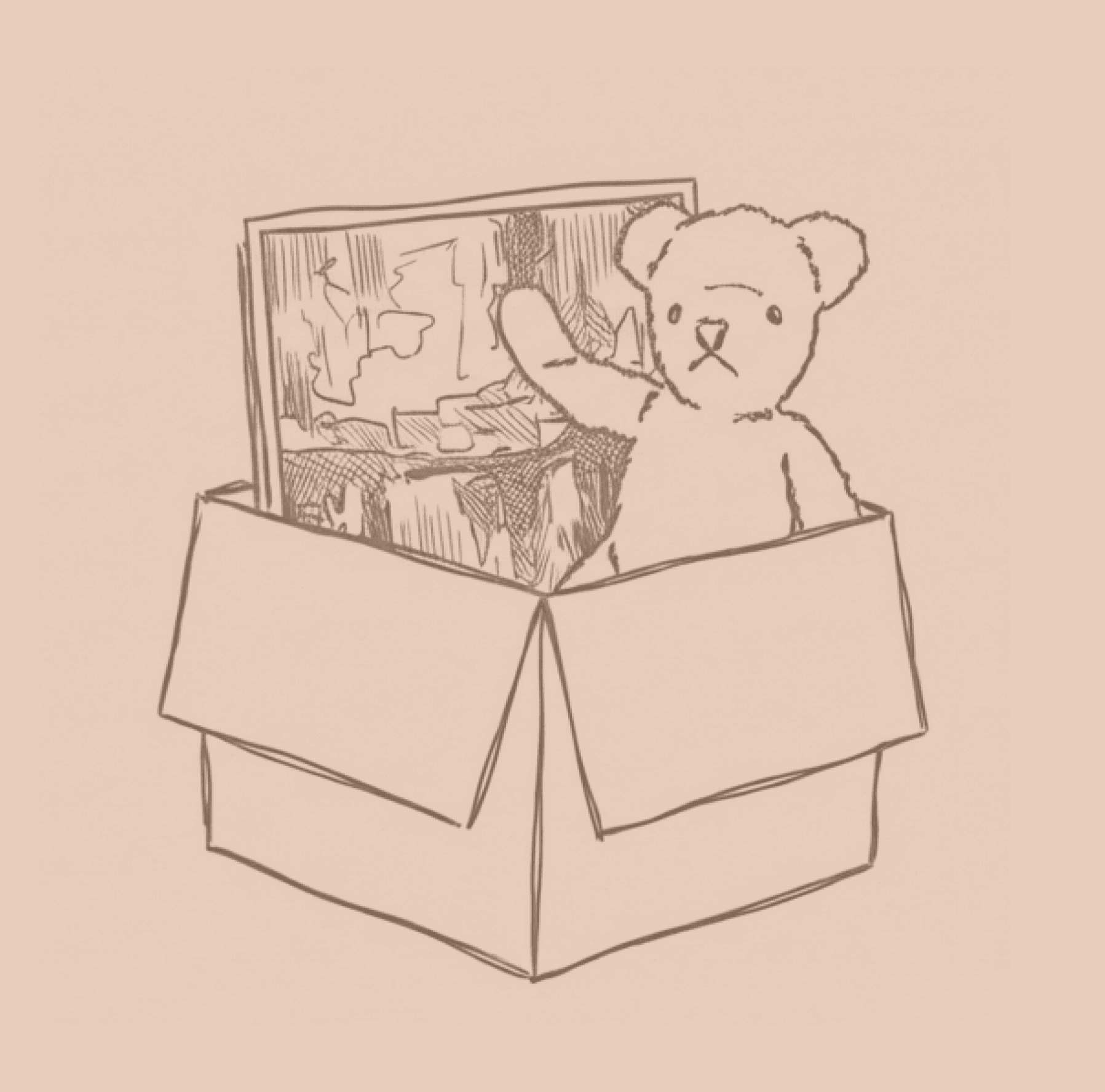
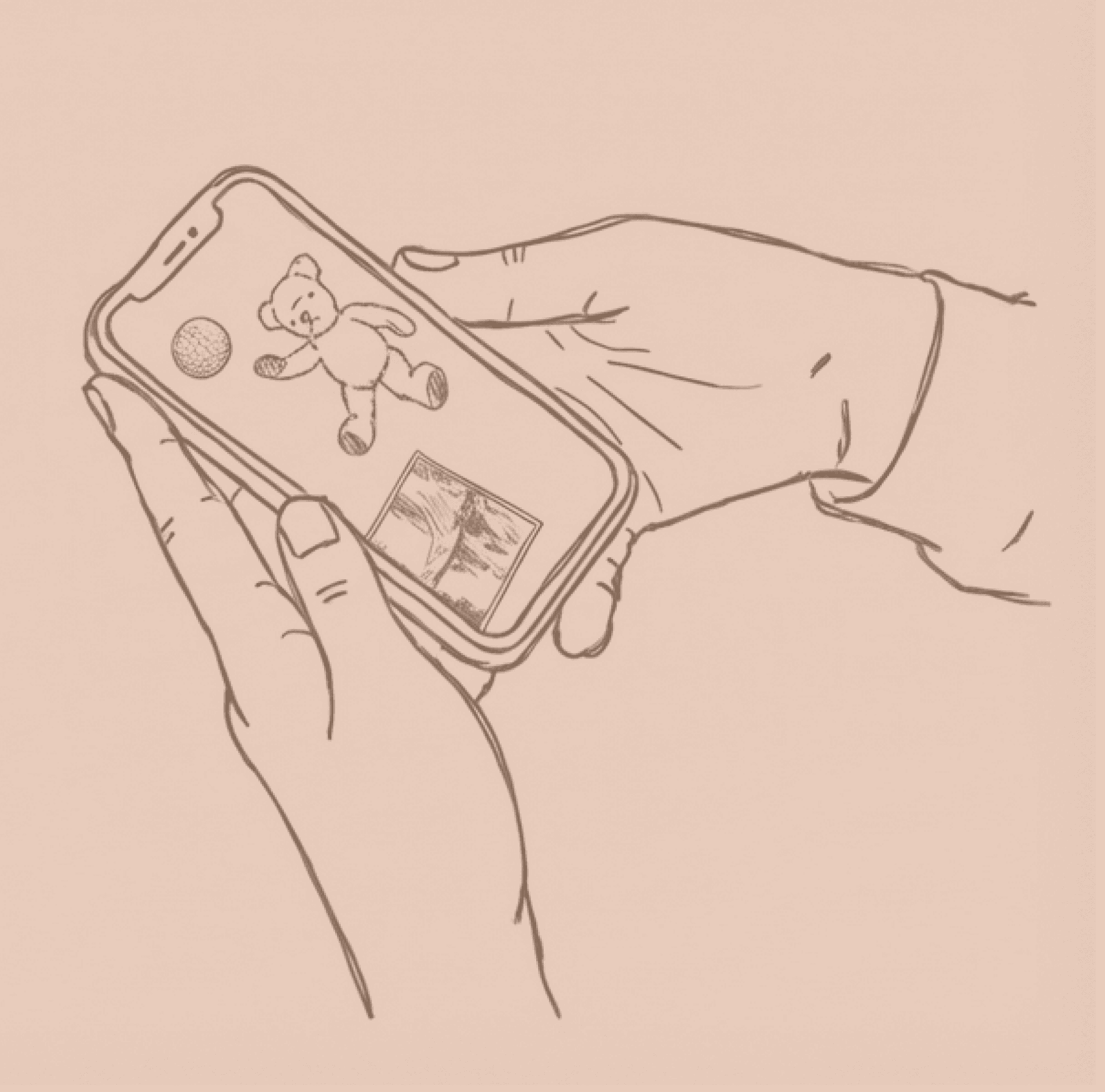
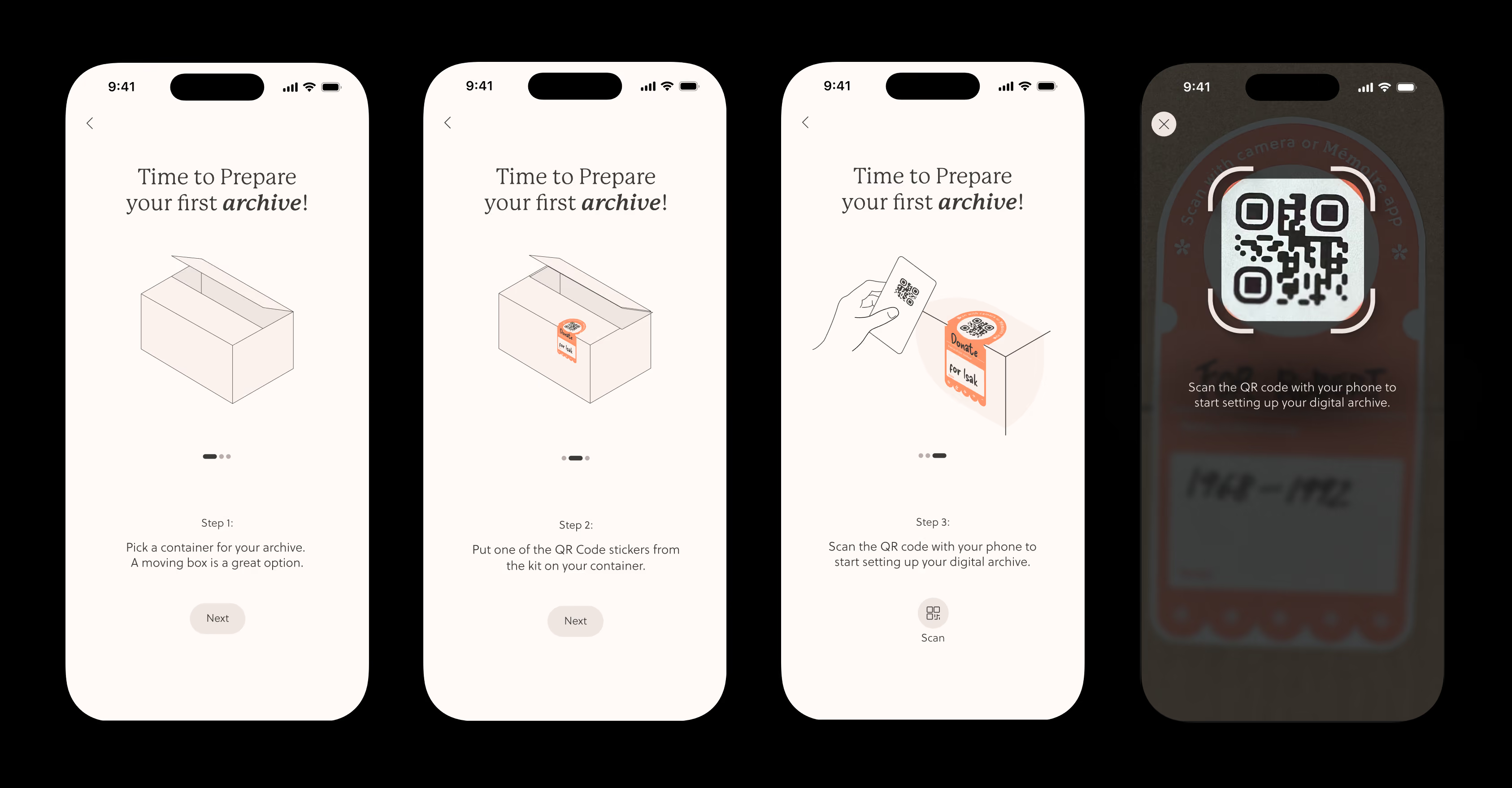
Prepare your Archive
The digital app guides you through the process of setting up your first archive. By attaching the accompanying QR-code sticker to a container of your choice and scanning it, a link is created between your physical and digital archive.
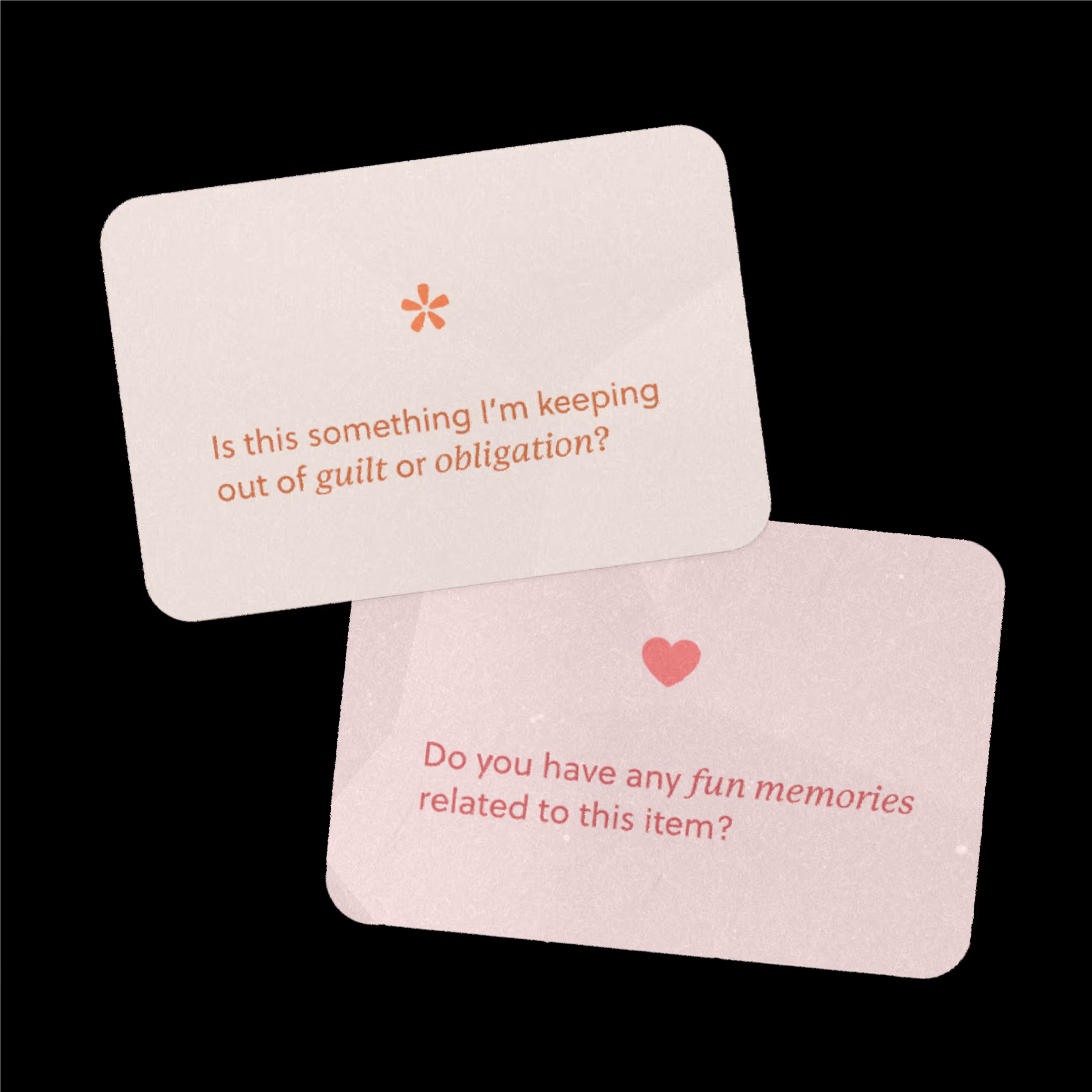
Evaluate what to keep or discard
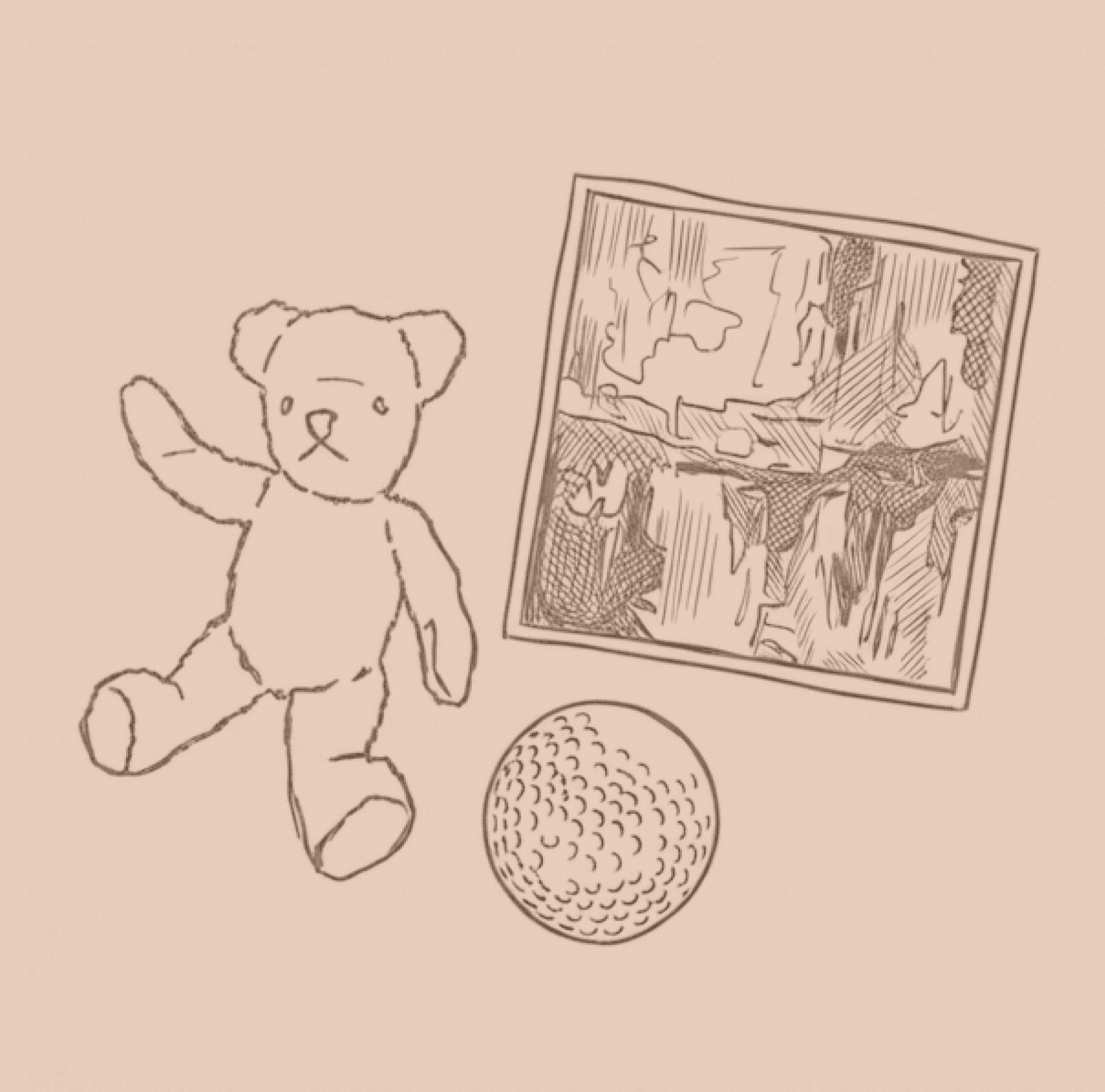
A good first step is to organise your belongings, deciding what you want to keep and what can be thrown away, donated, or sold. The accompanying cards can support you through this process by prompting reflection on each item.
Document and Contextualize
When you have found an item you want to archive, you can document and contextualize it in the digital archive. Here you can retell the stories and memories that make this particular item truly special, using text, photos, drawings and recordings.
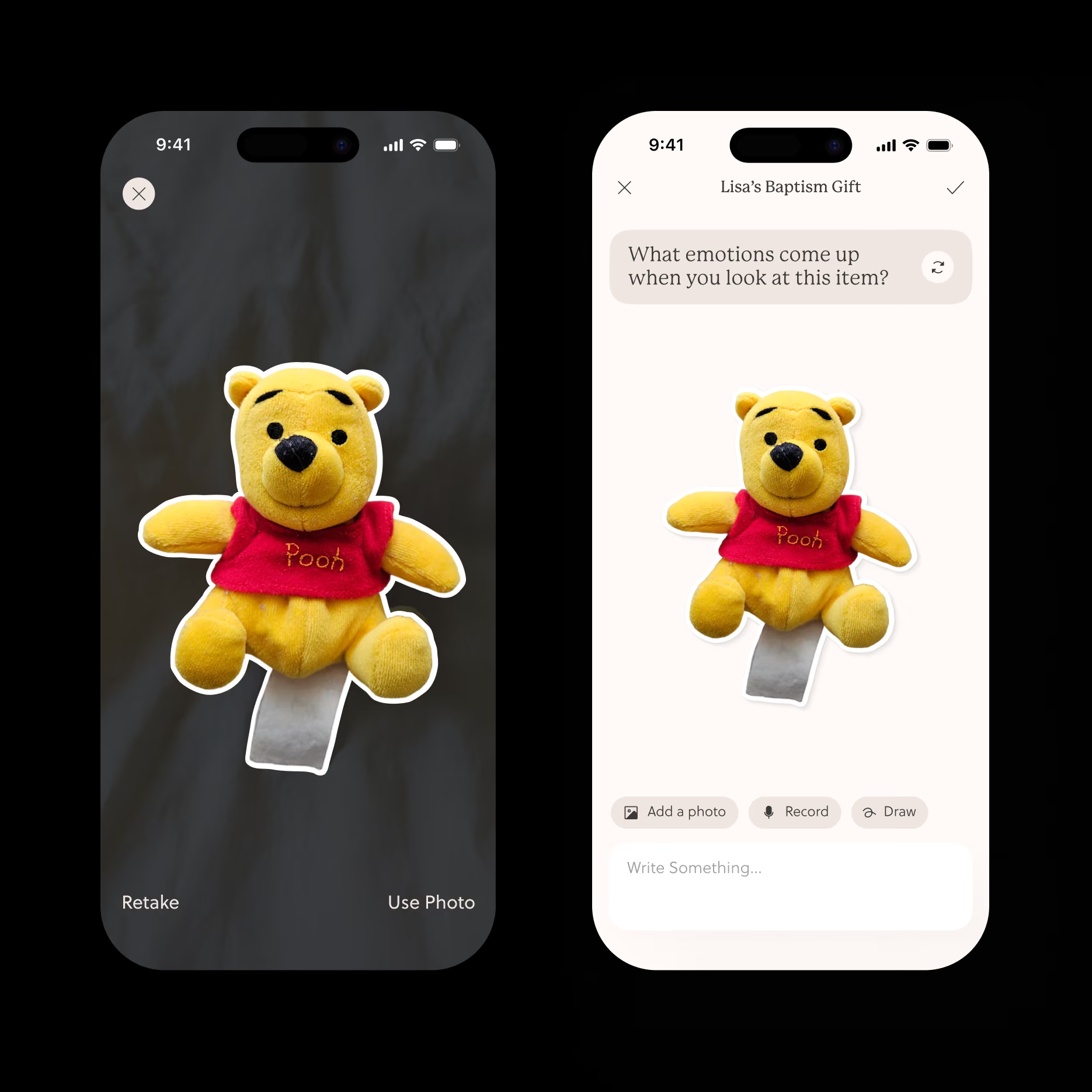
Preserving your Stories
At a later date, when a family member or someone close to you goes through your archive, the digital experience helps explain the sentimental value of its contents, even when you are not there. The context can help others feel the same appreciation you felt, and guide them in deciding each item's fate.
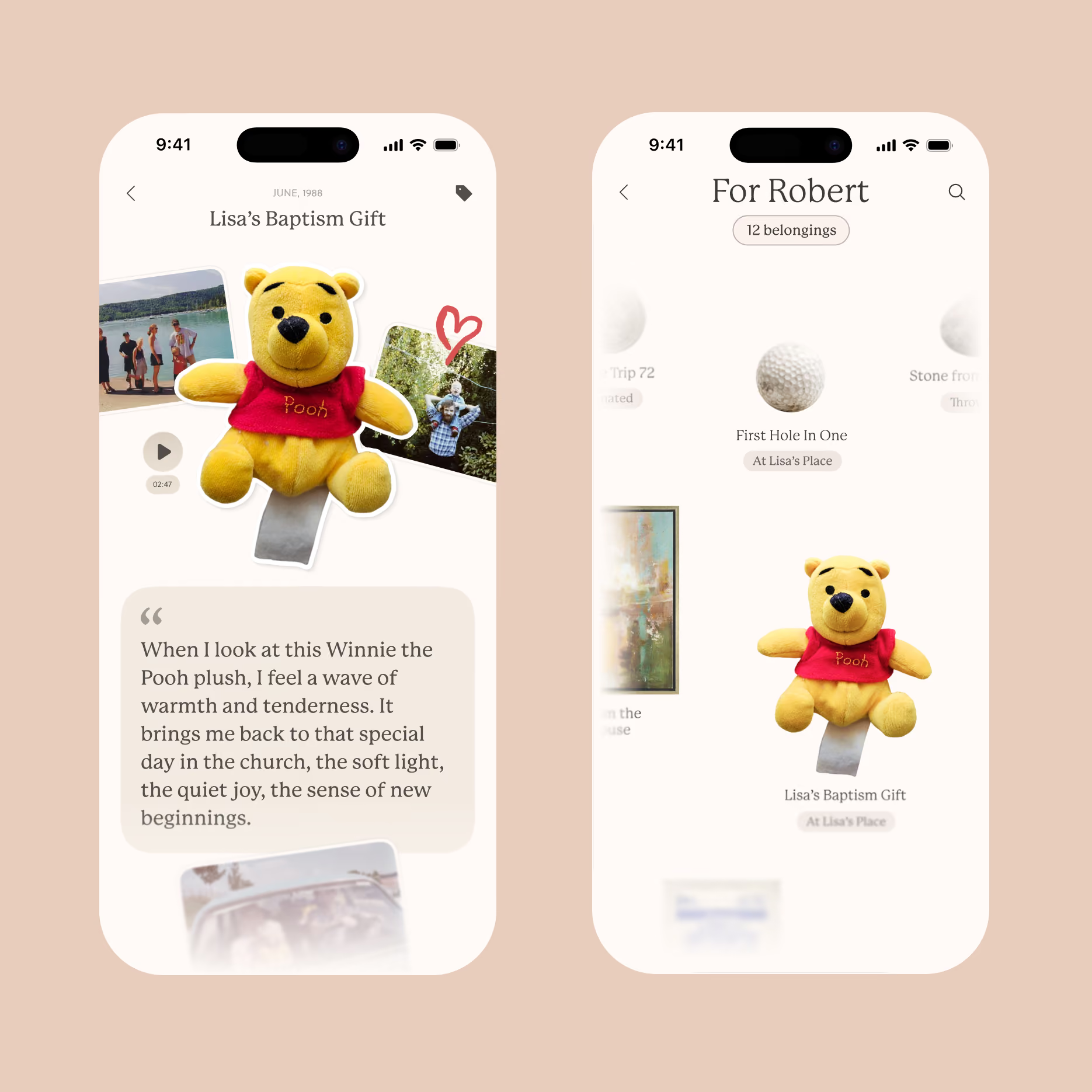
Participatory Approach
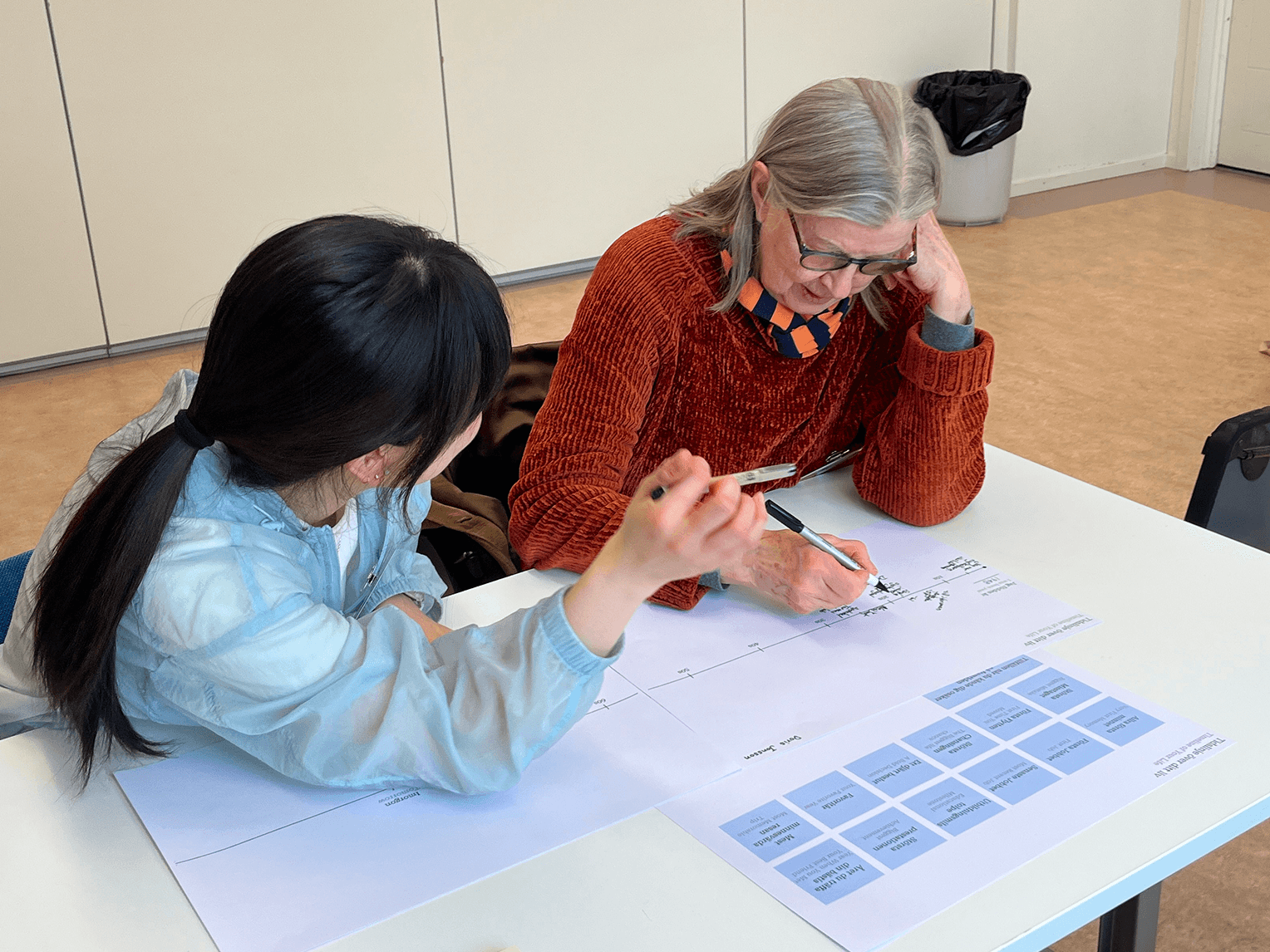
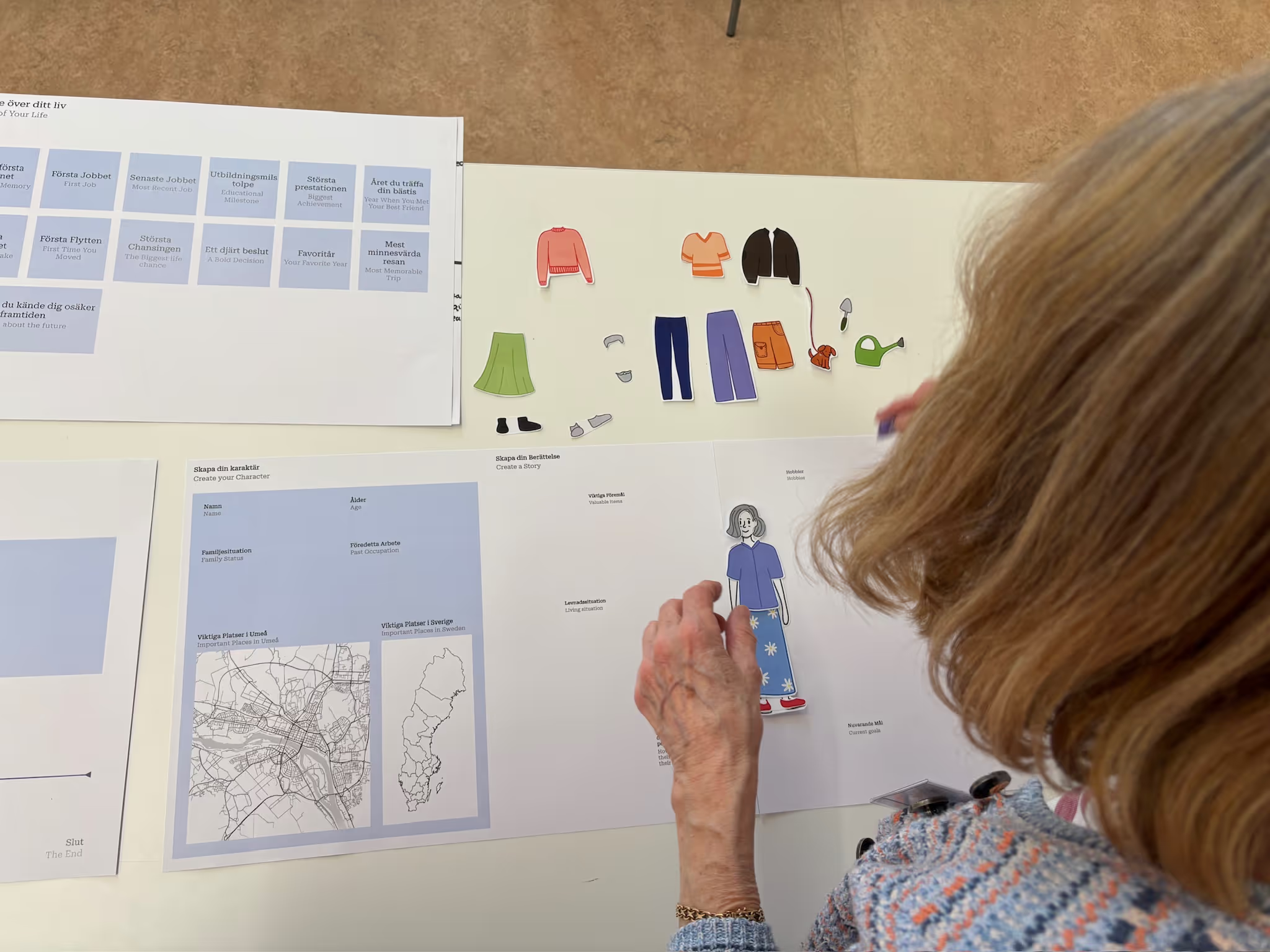
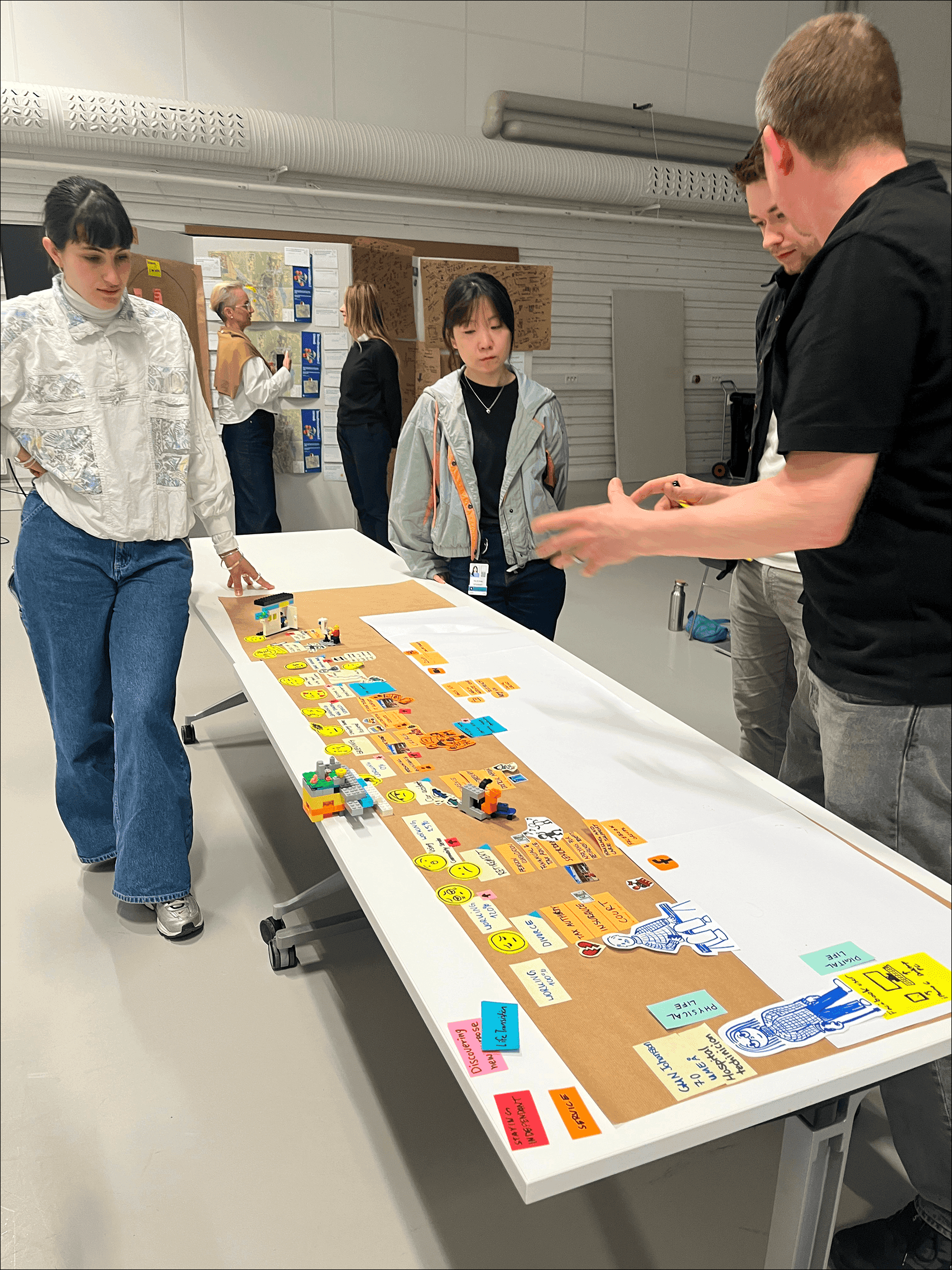
A central part of this project was its participatory design approach, collaborating with people over the age of 65 to design a service for elders going through a life transition.
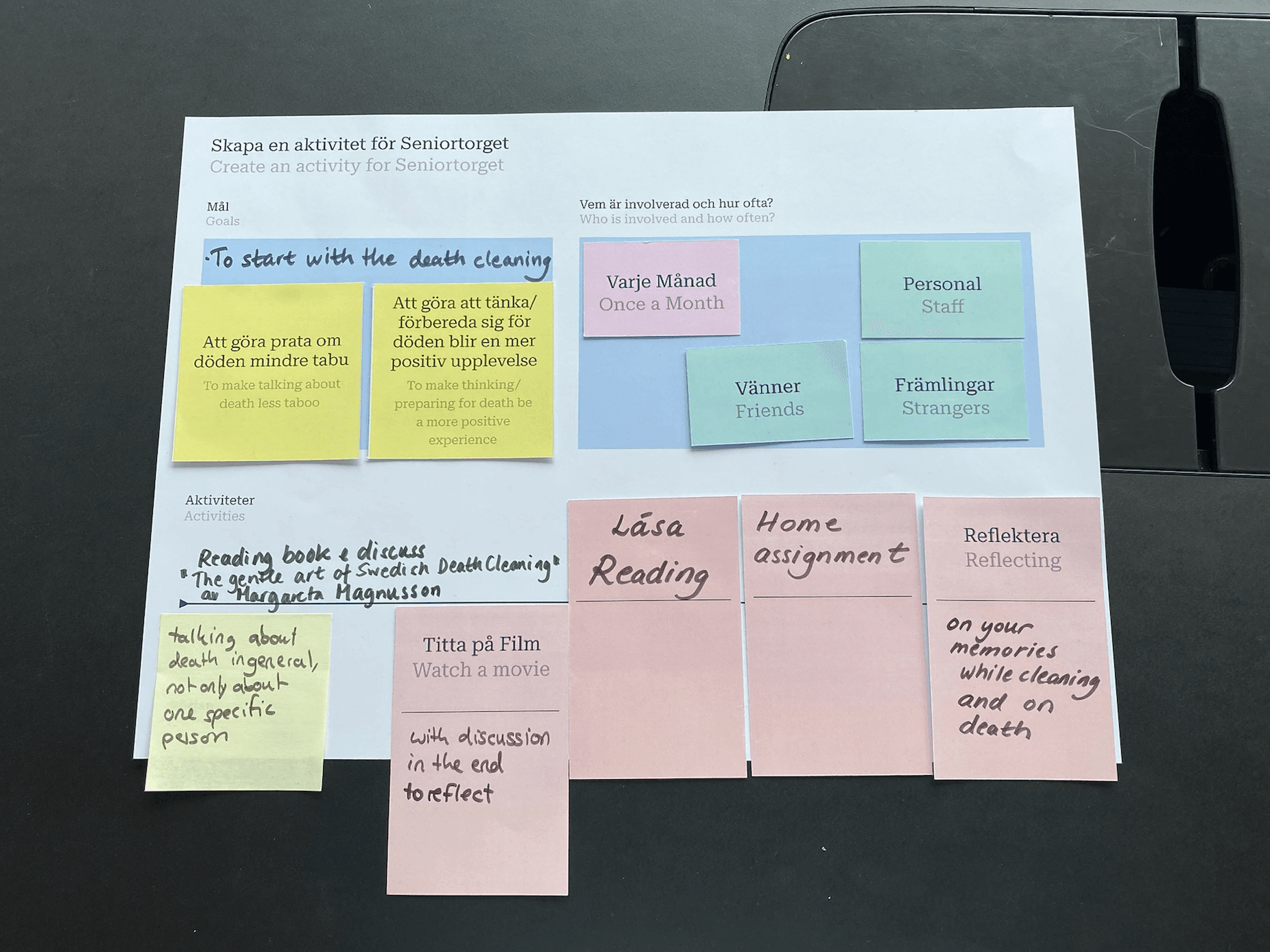
The key challenge was how to meaningfully involve participants with little to no design experience without overwhelming them or over-directing them. We addressed this through a series of creative exercises and workshops, gradually handing over more creative control as the project progressed. We also reframed parts of the process to feel more familiar. For example, instead of "designing a service," which can feel abstract to someone unfamiliar with service design, we asked participants to create an activity for Seniortorget, a local community centre for elders.
It was rewarding to see how our project ended up being shaped by the participants' stories. A main inspiration for the final concept was one participant's memory of receiving a box of items after their father passed, and not knowing what to do with them due to the lack of context around the items and photos inside.